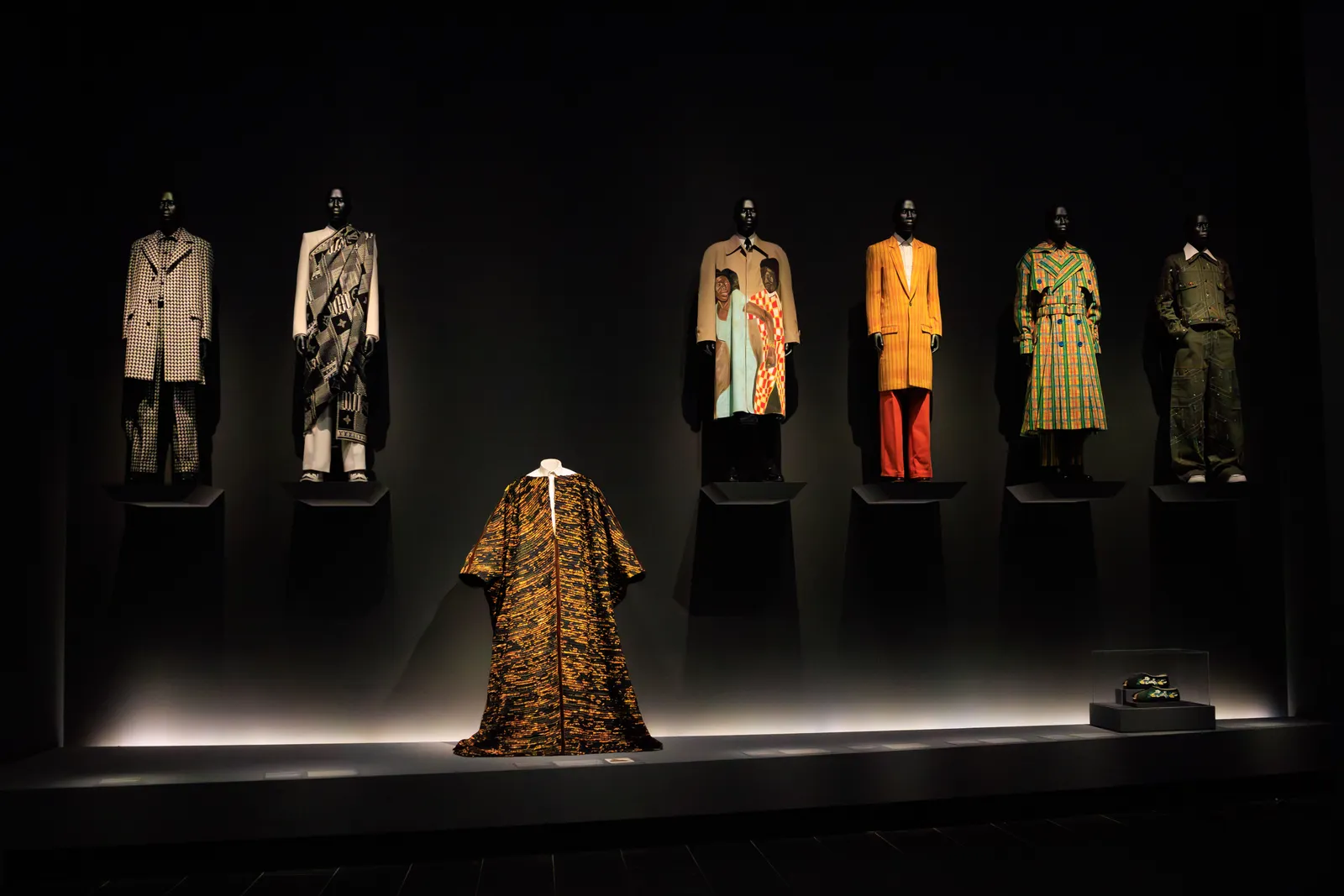
Picture this: I’m climbing those grand steps of the Metropolitan Museum of Art, heart pounding like it’s my first day of school, knowing inside waits a piece of my soul on display. That’s how it felt when I first laid eyes on my grandmother Ivy Ralph’s original Kareeba suit in the “Superfine: Tailoring Black Style” exhibition. As her granddaughter, I’ve carried her stories like treasured heirlooms, but seeing her creation celebrated among centuries of Black fashion innovation? It hit different—tears streaming, pride swelling, a full-circle moment blending family lore with global history. This isn’t just about clothes; it’s about resilience, identity, and how one woman’s needle threaded a path from Jamaican roots to New York’s iconic halls.
The Roots of a Revolutionary Design
My grandmother, Ivy Ralph, didn’t set out to change the world—she just wanted men to stop sweating through their shirts in Jamaica’s heat. Born an orphan in Chantilly, Mandeville, she built her life from scratch, traveling to New York as a young woman to work as a housekeeper, then a nurse at Harlem Hospital. There, she met my grandfather, Dr. Stanley Lee Ralph, and later honed her skills at the Fashion Institute of Technology. Her designs weren’t frivolous; they were practical rebellions against colonial norms, turning everyday attire into statements of freedom.
From Humble Beginnings to Fashion Pioneer
Ivy’s journey reminds me of those old family photos where she’d pose with a measuring tape like a wand. She founded The House of Ivy in the 1960s, blending African influences with Caribbean flair. By the early 1970s, she’d created the Kareeba suit—a breathable alternative to stuffy European suits. It was her way of saying, “Why suffer for style when you can thrive in it?” Her work earned her Jamaica’s Order of Distinction in 1999, a nod to her lasting impact.
The Kareeba Suit: A Symbol of Decolonization
The suit itself is genius in its simplicity: an open-neck jacket over matching trousers, no tie required. Popularized by Prime Minister Michael Manley, it became a uniform for progressives during Jamaica’s push for independence. I remember her telling me how it freed men from “psychological surrender” to colonial trauma, as Manley put it. Worn by leaders across the Caribbean and Africa, it shouted cultural pride without a word.
How the Kareeba Suit Shaped Jamaican Identity
Growing up, I’d sneak into her factory at dawn, mesmerized by the hum of machines as she cut patterns. Those mornings taught me preparation’s power—lessons that stuck when I relaunched her brand. The Kareeba wasn’t just clothing; it challenged the status quo, offering dignity in a post-colonial world. Even after the 1981 ban by a new government, its spirit endured, influencing global menswear trends toward comfort and culture.
Political Power in Every Stitch
Michael Manley donned it for meetings with Queen Elizabeth II, turning heads and sparking debates. Other wearers included Barbados’ Errol Barrow and Tanzania’s Julius Nyerere, making it a diplomatic staple. My mom, Sheryl Lee Ralph, often shares how it symbolized unity—politicians ditching ties for something homegrown. It’s funny now, thinking how a suit could stir such controversy, but that’s the magic of fashion as activism.
Global Reach and Enduring Legacy
From The Jackson 5 to everyday folks, the Kareeba crossed oceans. A 1976 New York Times piece hailed it as universally accepted in Jamaica, a far cry from its humble start. Today, it represents sustainable style—breathable fabrics reducing waste in hot climates. Reviving it feels like honoring her whisper: “Style, yuh have it or yuh nuh have it.”
Comparing the Kareeba to Traditional Western Suits
I’ve always loved how the Kareeba flips the script on formalwear. Picture a stifling wool suit versus this airy ensemble—it’s like comparing a cage to freedom. Here’s a side-by-side look at what sets them apart, drawing from my family’s tales and fashion history.
| Feature | Kareeba Suit | Traditional Western Suit |
|---|---|---|
| Design | Open-neck jacket over trousers, no tie | Closed collar, tie, structured jacket |
| Material | Lightweight, breathable fabrics | Heavy wool or synthetics |
| Climate Suitability | Ideal for tropics, promotes comfort | Often uncomfortable in heat |
| Cultural Significance | Symbol of decolonization and pride | Rooted in European colonial norms |
| Versatility | Casual to formal, easy to adapt | Strictly formal, less flexible |
This table highlights why it resonated—practical yet profound.
Pros and Cons of Embracing Cultural Attire Like the Kareeba
Pros:
- Boosts cultural identity, fostering pride in heritage.
- Enhances comfort in diverse climates, reducing health issues like overheating.
- Promotes sustainability with local, breathable materials.
Cons:
- Faces resistance from traditionalists clinging to Western standards.
- Limited availability outside niche markets, making sourcing tricky.
- Risk of cultural appropriation if not handled respectfully.
Reviving a Family Legacy in Modern Times
After my grandmother passed in 2018, I felt a pull to keep her flame alive. Digging through our garage in Jamaica, I found over 30 of her designs, including a red tweed skirt she made 64 years ago from Italian fabric. Wearing it to the Met was surreal—like carrying her with me. In 2021, I relaunched The House of Ivy with updated kaftans and crochet pieces, blending vintage vibes with today’s edge.
Lessons from a Sewing Machine
She’d say, “How can one learn without a teacher?”—words that guided my styling career. I hand-sew like she taught, sketching ideas from fabric hunts we shared. Her boutique at Devon House was my playground, where I’d watch deliveries and dream big. Those memories fuel my work at WalkGoodLA, merging wellness with fashion.
New Designs on the Horizon
We’re dropping fresh Kareeba iterations soon—think modern cuts with eco-friendly twists. It’s not just business; it’s preserving “her-story,” as I call it. Collaborations with contemporary artists keep it relevant, proving timeless style evolves without losing roots.
The “Superfine: Tailoring Black Style” Exhibition Unveiled
This Met show, running from May 10 to October 26, 2025, dives into Black dandyism across 300 years, from 18th-century Atlantic diaspora to today. Curated with input from experts like Monica L. Miller, it features garments, paintings, and photos in 12 sections exploring traits like heritage and cosmopolitanism. It’s a luminous tribute, as The New York Times called it, reclaiming Black style as resistance and art.
What Makes the Exhibition Stand Out
Organized in the Iris and B. Gerald Cantor Exhibition Hall, it spotlights how dandyism—born from African-European blends—opened social doors amid oppression. Highlights include Olaudah Equiano’s autobiography, tying “superfine” wool to freedom. My grandmother’s suit fits perfectly, showcasing tailoring as identity formation.
Featured Pieces and Their Stories
From Dapper Dan ensembles to Andre Leon Talley’s kaftans, it’s a feast for fashion lovers. The Kareeba adds a Caribbean voice, emphasizing decolonization. Videos and artifacts weave narratives, making history feel alive—like stepping into ancestors’ wardrobes.
Emotional Ties: Family History Meets Museum Walls
Visiting felt like a spiritual reunion—her spirit beside me as I gazed at the sandy-toned suit. I cried rivers, releasing grief I’d bottled since her passing. Wearing her red skirt, dry-cleaning tag intact, was my homage. It bridged generations, turning personal loss into public celebration.
A Granddaughter’s Reflection
She’d wake at 5 a.m. for devotionals, and I’d trail her, absorbing every lesson. “Class, yuh have it or yuh nuh have it,” she’d tease. Those words echo in my designs, reminding me roots ground us while we rise. The Met display? Her wildest dream realized.
Sharing the Legacy with the World
Curator Monica L. Miller reached out in September 2024, and saying yes was instinctual. Now, visitors see Jamaica’s mark on global style. It’s emotional—proof environments don’t define us; belief does.
The Broader Impact on Black Fashion History
Black tailoring isn’t just threads—it’s survival, expression, innovation. From enslaved dandies subverting norms to modern streetwear, it’s resistance woven in. My grandmother’s suit exemplifies this, inspiring designers to honor heritage while pushing boundaries. In a world quick to appropriate, exhibitions like Superfine reclaim narratives.
Influential Figures in Black Tailoring
- Dapper Dan: Harlem’s icon, blending luxury logos with street savvy.
- Andre Leon Talley: Vogue legend, whose kaftans embody grandeur.
- Wales Bonner: Contemporary force, fusing African diaspora elements.
- Telfar Clemens: Democratizing luxury with unisex bags and suits.
For deeper dives, explore Monica L. Miller’s book Slaves to Fashion.
Where to Explore More Black Fashion
Visit the Met’s site for virtual tours or snag the exhibition catalog. For hands-on, check FIT’s archives or Jamaica’s Devon House. Online, platforms like Africa Fashion International offer resources.
People Also Ask: Common Queries Answered
Drawing from popular searches around the exhibition and Black style history.
What is the theme of the Superfine exhibition at the Met?
It’s a deep dive into Black dandyism over 300 years, exploring style as identity and resistance in the Atlantic diaspora.
What does “Superfine” refer to in the context of the exhibition?
It nods to high-grade wool from Olaudah Equiano’s autobiography, symbolizing luxury and self-possession post-enslavement.
Who curated the Superfine: Tailoring Black Style exhibition?
Guest curator Monica L. Miller, with Andrew Bolton overseeing, drew from her book on Black dandyism.
What is Black dandyism and how is it featured?
It’s an aesthetic of elegance and subversion; the show uses 12 traits to showcase its evolution through art and garments.
FAQ
What is a Kareeba suit and who designed it?
A two-piece men’s outfit with an open-neck jacket and trousers, designed by Ivy Ralph in the 1970s as a tropical, decolonized alternative to Western suits.
How did the Kareeba suit become part of the Met’s collection?
Curator Monica L. Miller invited Ivy Coco Maurice to loan an original for the Superfine exhibition, honoring its cultural significance.
Where can I buy modern versions of the Kareeba suit?
Check The House of Ivy’s online shop for relaunched editions, or vintage sites like Etsy for inspired pieces starting at $100.
What other items are featured in the Superfine exhibition?
Garments by Dapper Dan, paintings from the 1700s, and contemporary photos, all tied to Black style’s historical arc.
Best tools for researching family fashion history?
Apps like Ancestry for lineage ties, or scanning software like Adobe Scan for digitizing old sketches—great for preserving heirlooms.
Seeing my grandmother’s Kareeba suit at the Met isn’t just a family win—it’s a reminder that style can rewrite history. From her orphan beginnings to this global stage, Ivy Ralph proved dreams stitch themselves into reality. If you’re in NYC before October 26, 2025, go witness it; you might find your own threads connecting to the past. (Word count: 2,812)